The Door, Seoul, 2026




| Program | Pavilion |
| Location | Seokchon-dong, Seoul |
| Area | 17 ㎡ |
| Building Size | 1F |
| Client | Gallery MOT 828 |
| Construction | BACH P&D |
| Photo | DRAWING WORKS |
| Status | Completed |
이 프로젝트의 핵심은 지하에 위치한 갤러리를 ‘건물의 일부’가 아닌, ‘독립된 하나의 장소’로 인식시키는 것이다.
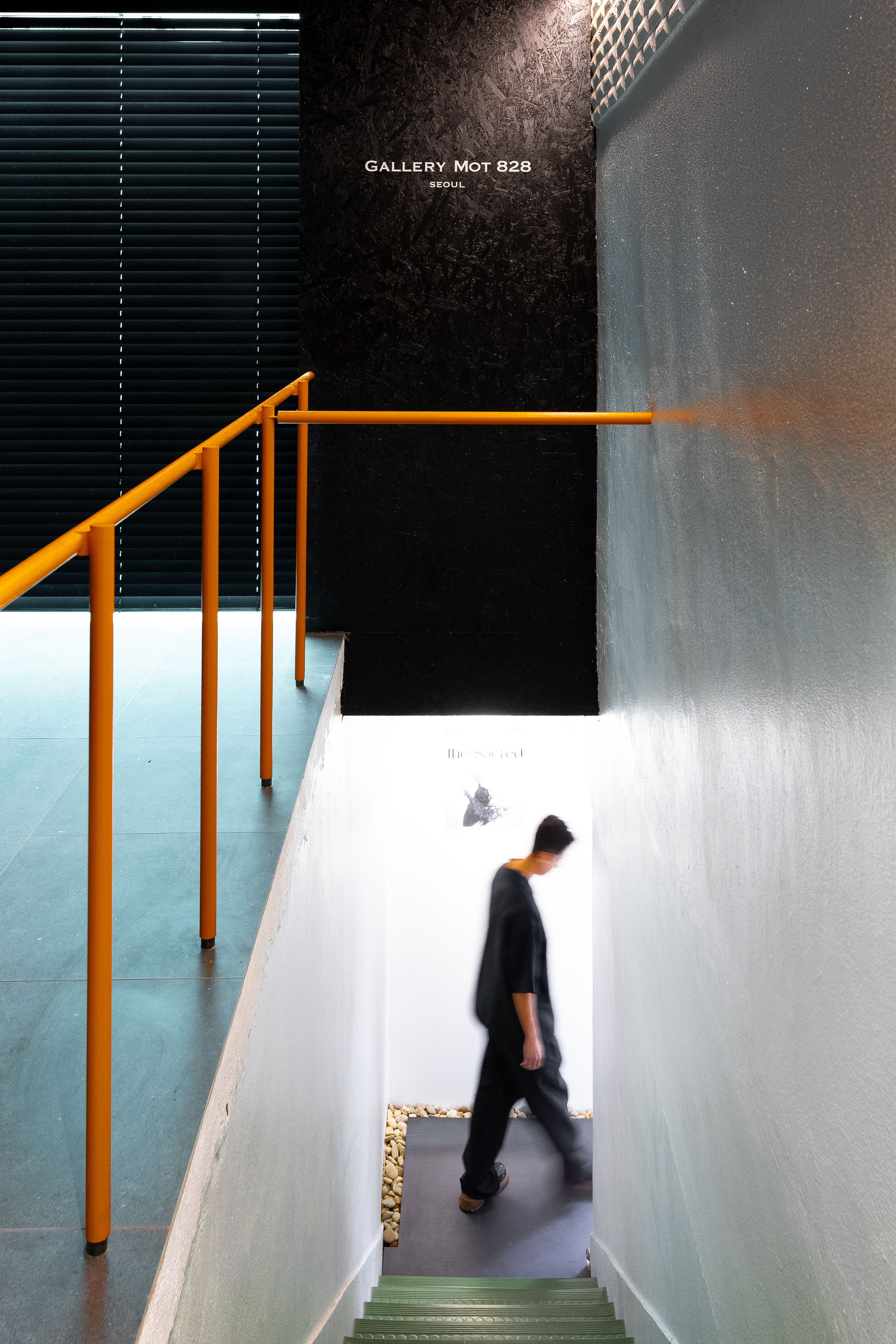
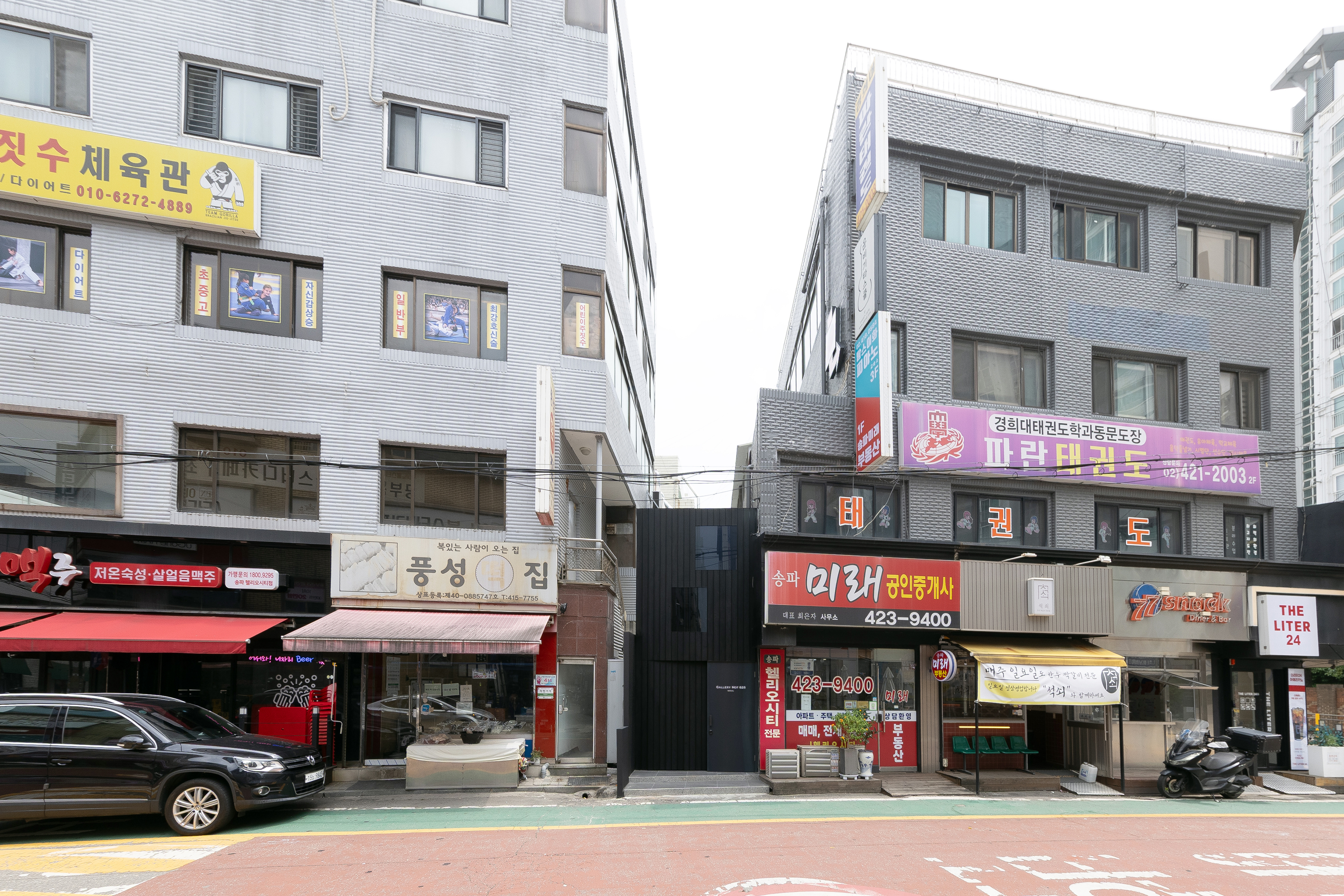
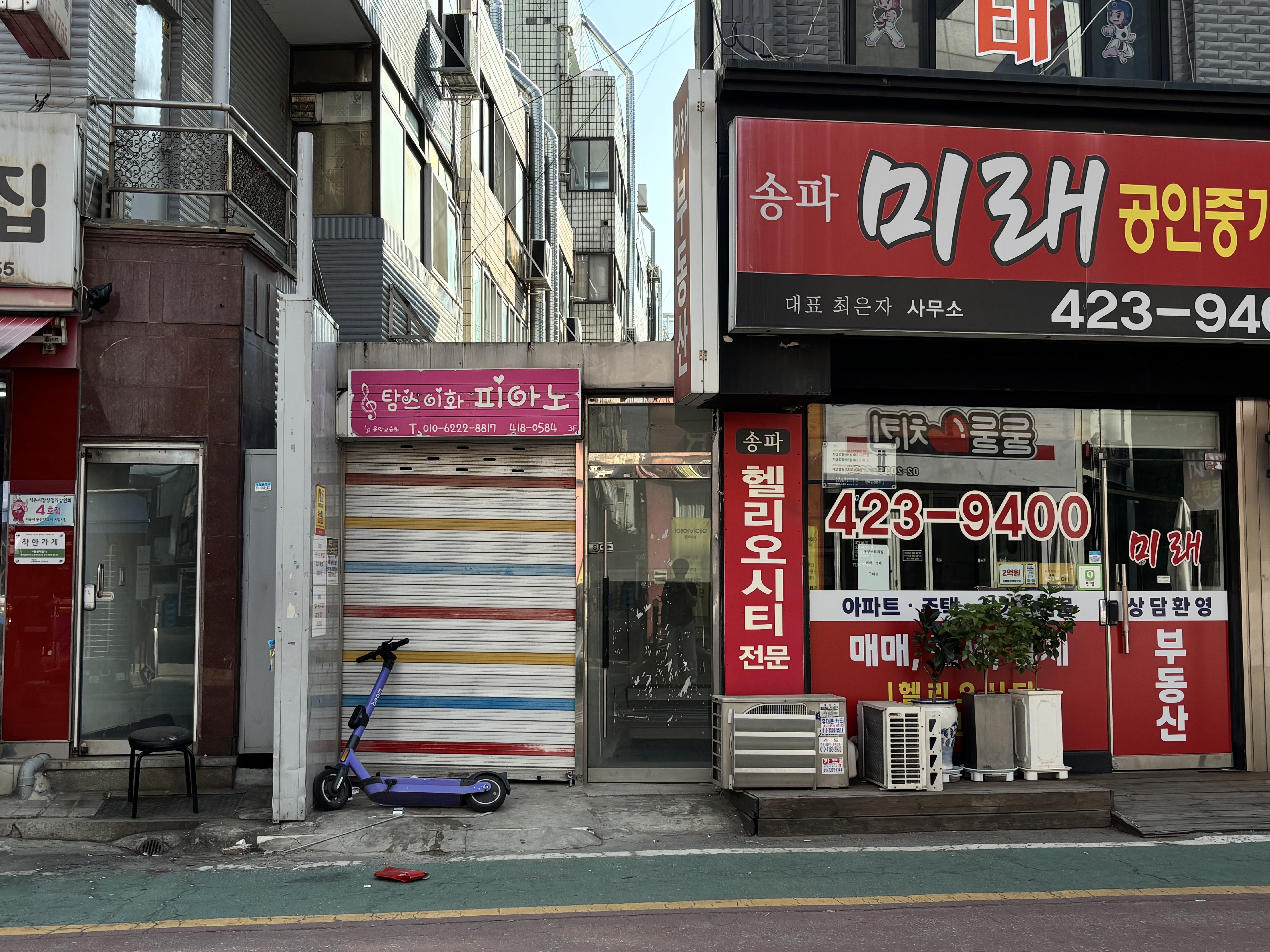
일반적인 지하 공간은 건물 내부 동선을 통해 접근하며, 자연스럽게 부속 공간으로 인식된다. 그러나 이 갤러리는 주차장에서 직접 연결되는 개별 출입구를 통해 기존 건물의 흐름과 완전히 분리된 접근 방식을 갖는다. 이로 인해 방문자는 건물에 들어가는 것이 아니라, 하나의 특정 목적지에 도착하는 경험을 하게 된다.
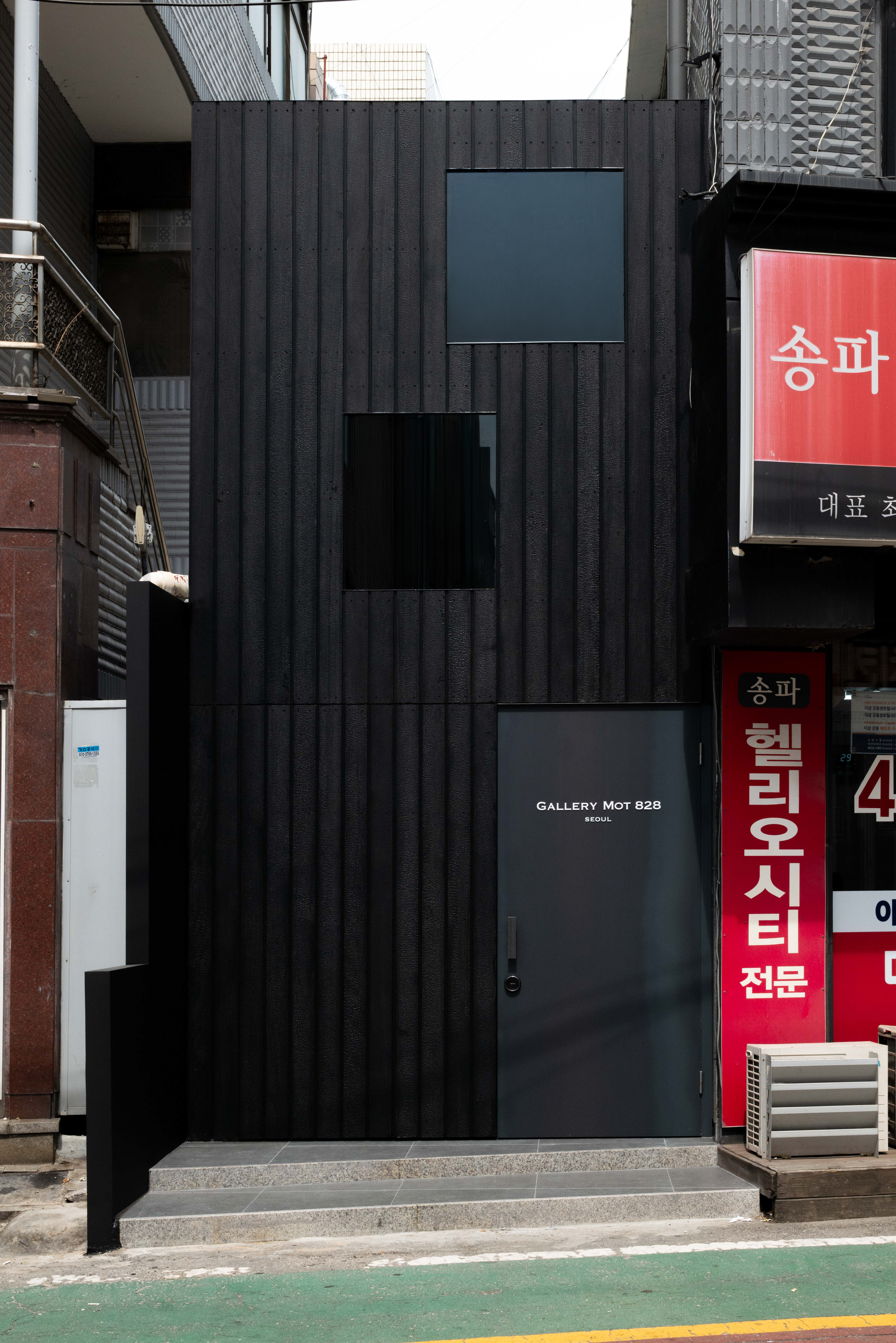
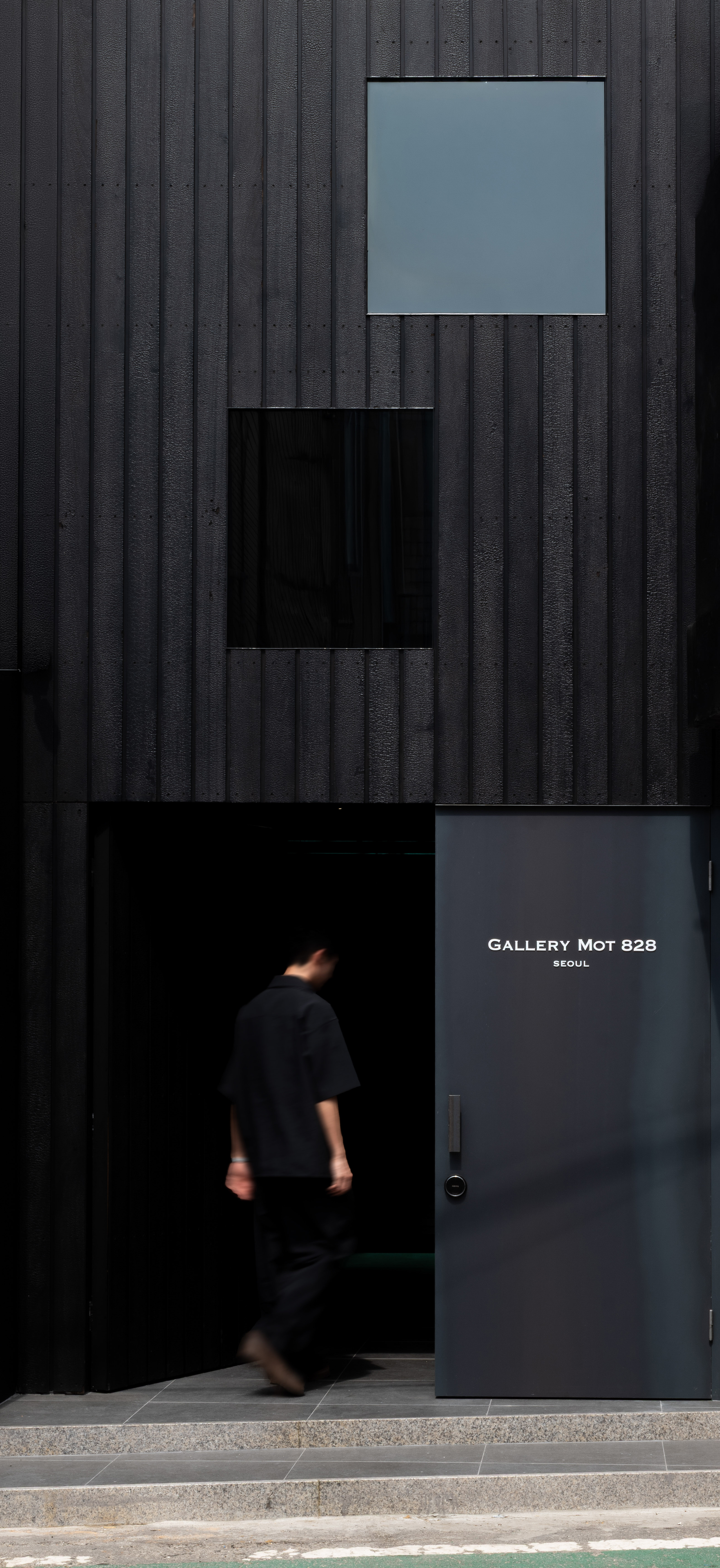
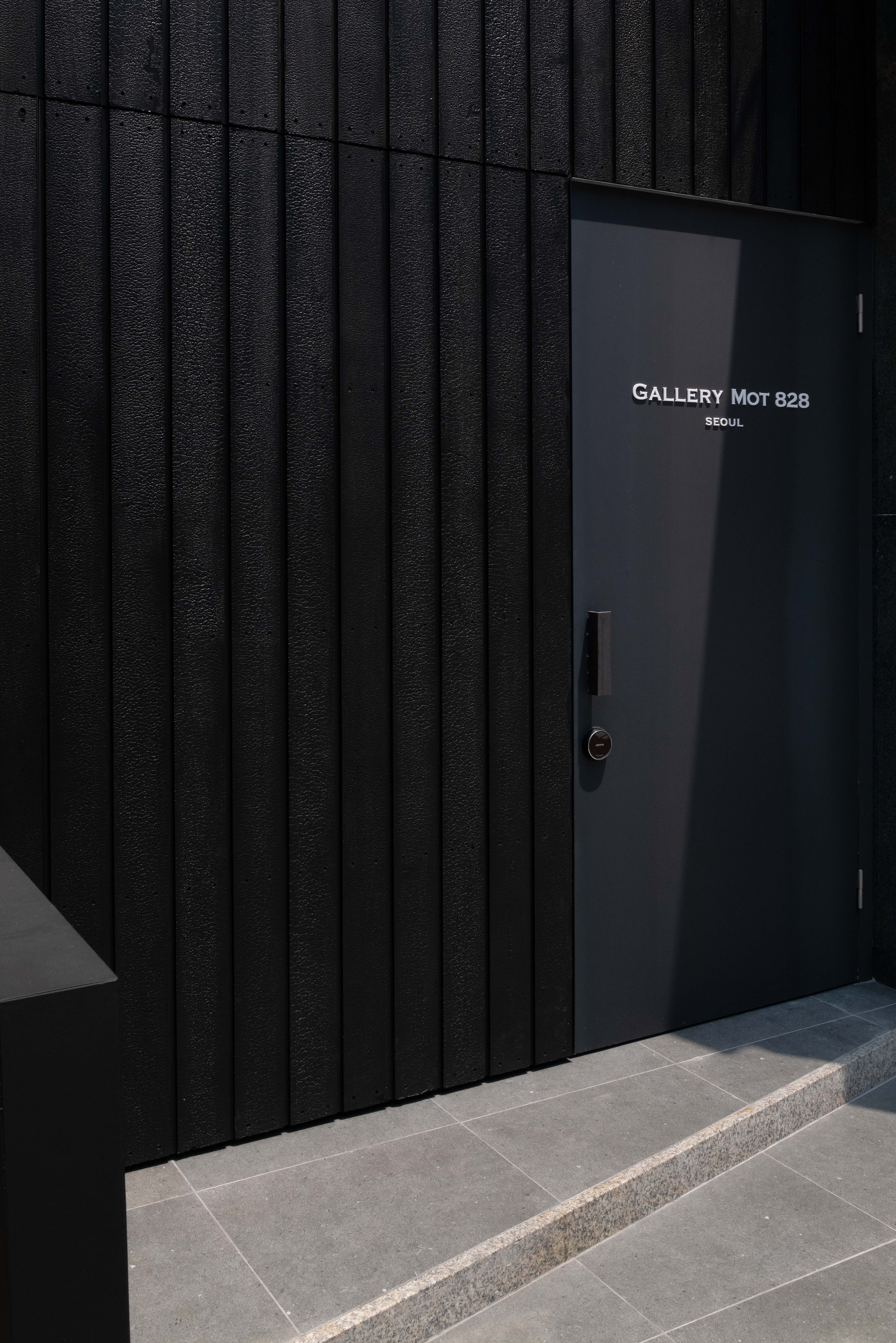
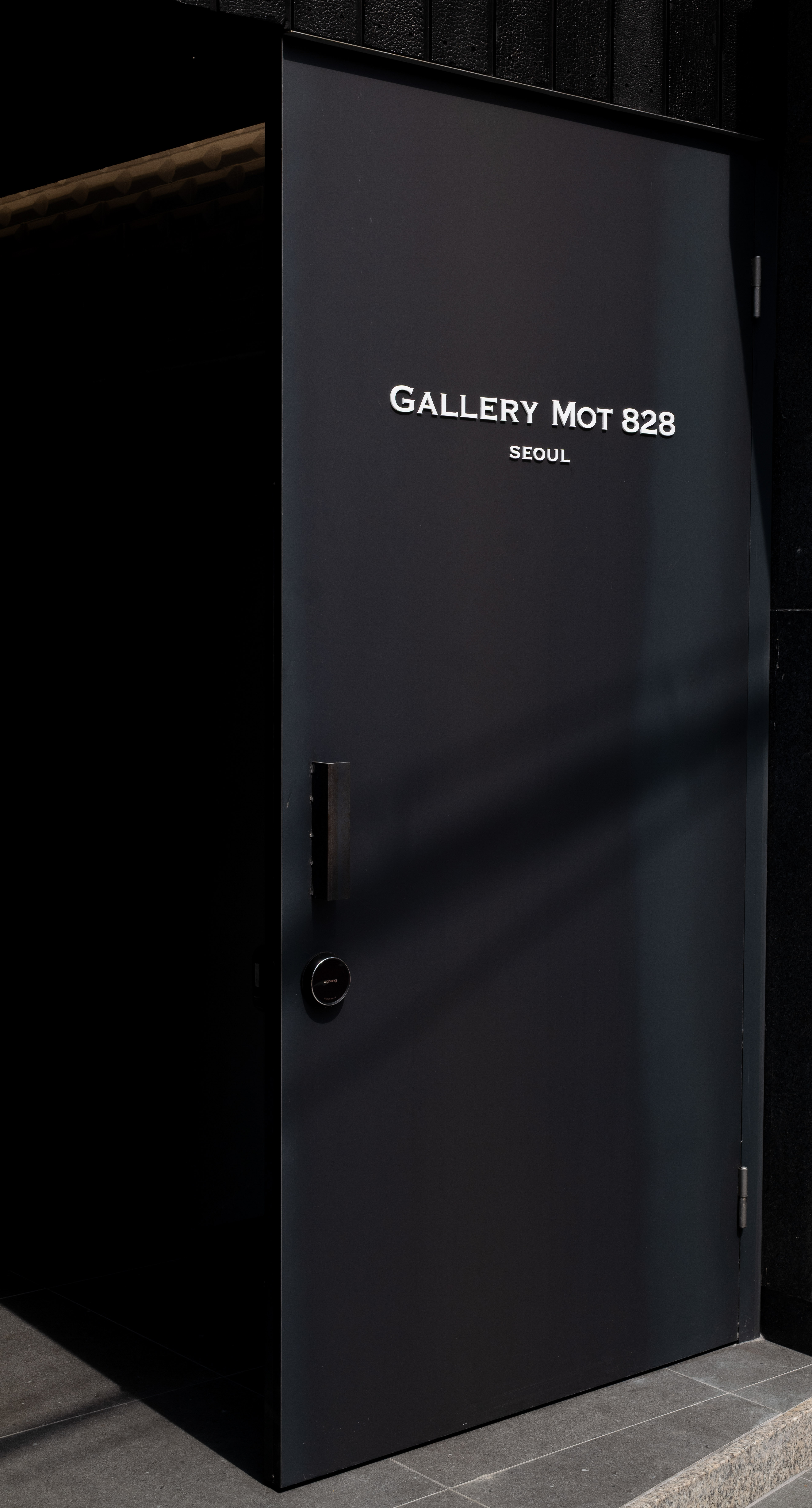
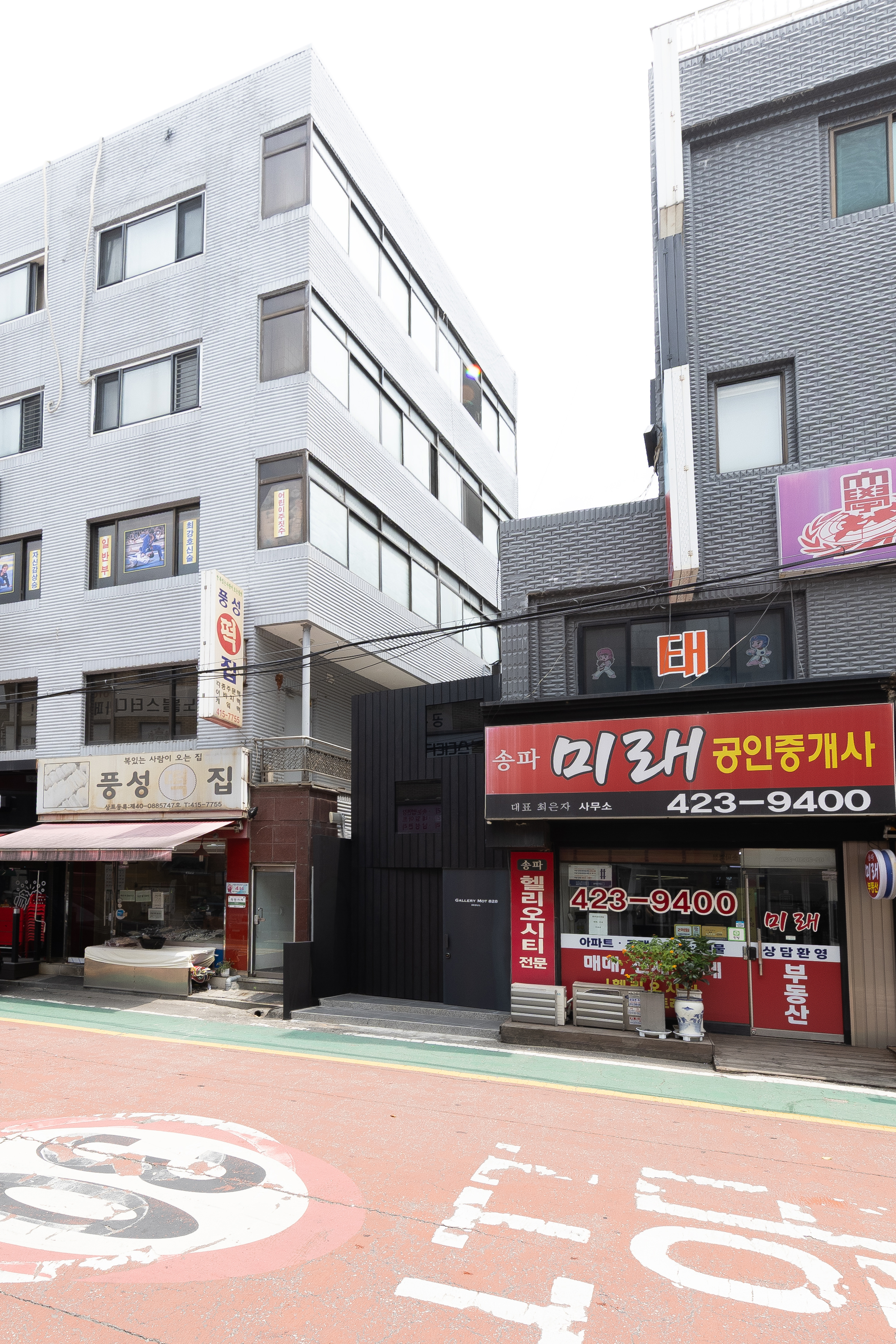
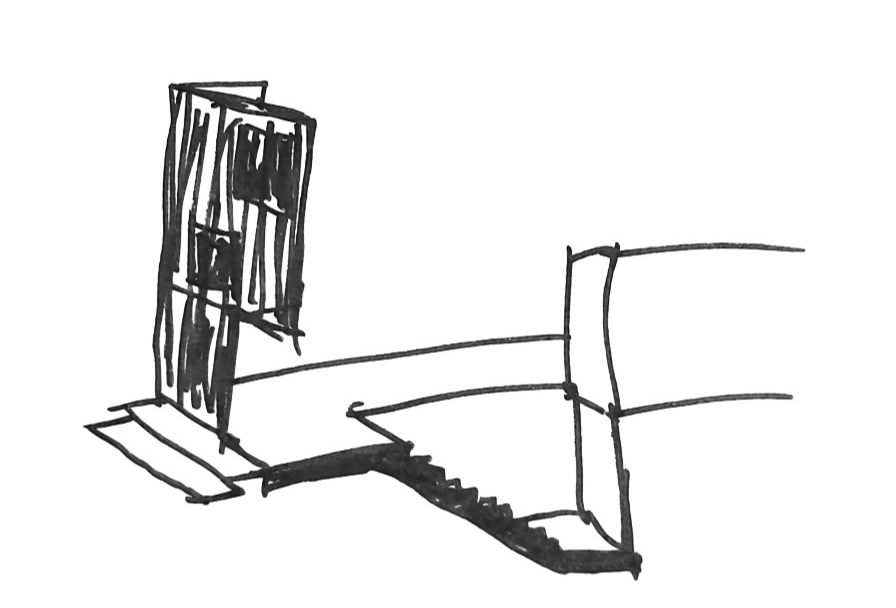
이러한 인식을 완성하는 핵심 장치는 출입구 파사드이다. 해당 출입구는 단순한 ‘지하 진입구’가 아니라, 독립된 건축의 입면으로 계획되었다. 지하로 내려가는 계단이나 입구의 개념이 아닌, 별도의 공간으로 진입하는 ‘정면’으로 인식되도록 디자인함으로써 물리적 위치와 인지적 경험 사이의 간극을 전환한다.
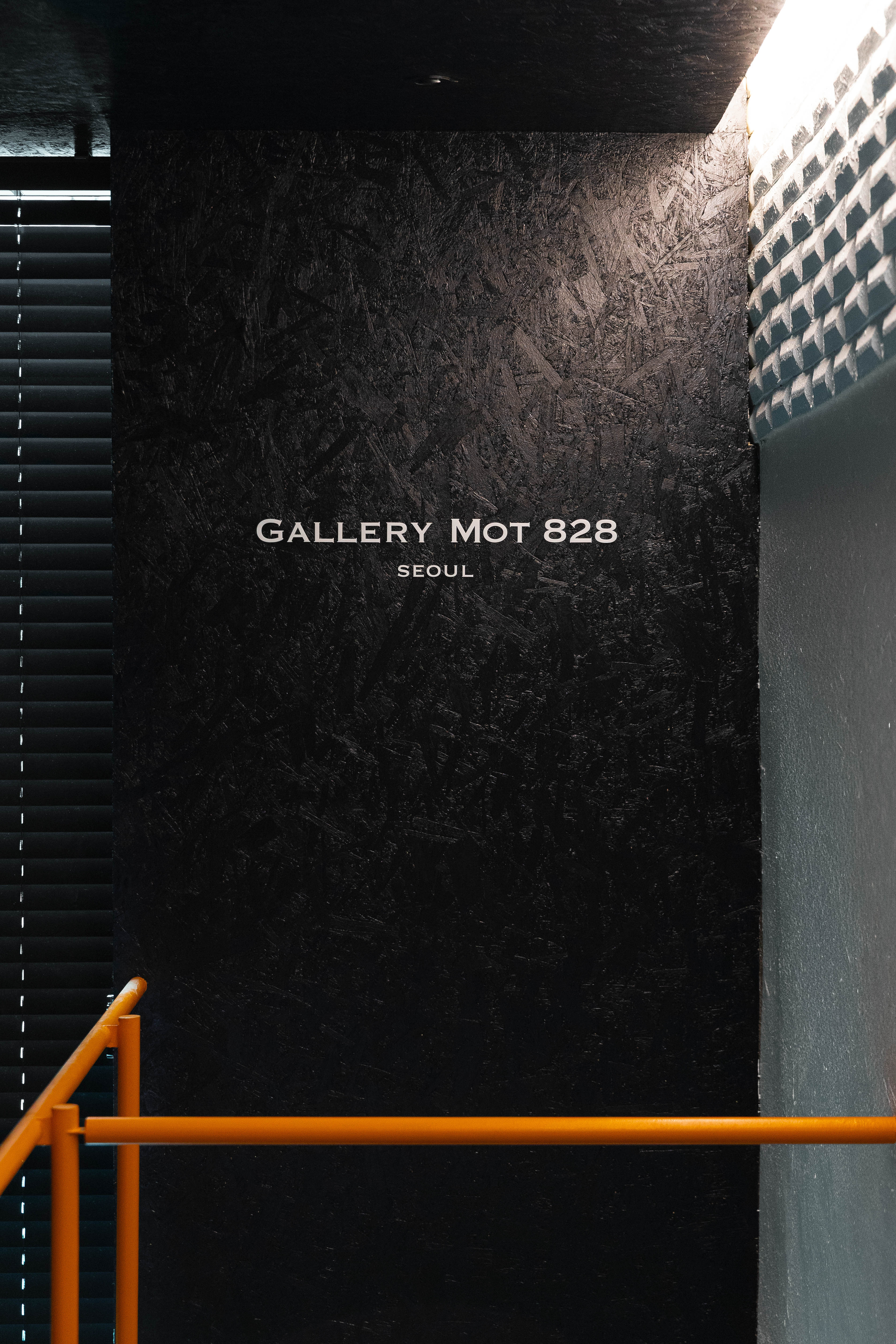
또한 이 파사드는 기능적 경계가 아닌, 갤러리의 정체성을 드러내는 첫 번째 전시 장면으로 작동한다. 외부에서부터 갤러리의 분위기와 성격을 전달하며, 진입 과정 자체가 하나의 경험이 되도록 구성하였다.
결과적으로 이 갤러리는 ‘지하에 위치한 공간’이 아니라, 독립된 접근 체계와 고유한 입면을 가진 또 하나의 장소로 작동한다. 출입구의 파사드는 그 장소성을 결정짓는 핵심 요소이다.
The project’s central ambition is to establish the gallery below ground not as an extension of the building, but as an autonomous place in its own right.
Underground spaces are conventionally accessed through the internal circulation of a building and are therefore understood as ancillary. This gallery, however, is approached through a dedicated entrance directly connected to the parking area, entirely separate from the existing building’s circulation. The visitor does not simply enter a building; they arrive at a distinct destination.
The entrance façade is the critical device through which this perception is formed. Rather than being treated as a utilitarian descent into the basement, it is conceived as the elevation of an independent architecture. It is designed to register not as stairs leading underground, but as a frontal threshold to another spatial realm—transforming the distance between its physical location and its perceived identity.
The façade also exceeds its role as a functional boundary. It becomes the gallery’s first act of exhibition: a surface that communicates its atmosphere and character from the exterior, and makes the very process of arrival part of the experience.
The gallery thus operates not as a space located beneath a building, but as another place—one with its own approach, its own façade, and its own presence. The entrance façade is the element that gives this place its architectural identity.